备考雅思大作文时,你是不是也有过这种 “努力却不涨分” 的困惑:
明明背了很多高级词汇和复杂句型,作文分数却一直停在 6.5;拿到题目能想到 2-3 个论点,但写的时候要么 “一句话说完没下文”,要么 “东拉西扯跑题”;段落之间像 “散装零件”,没逻辑衔接,考官读着找不到重点;甚至写完自己回头看,都觉得 “论点站不住脚,说服不了人”……
其实雅思大作文 6.5 和 7.5 的差距,从来不是 “词汇难度” 或 “句型复杂度”,而是 “结构是否清晰” 和 “论点是否有说服力”。
今天就从这两个提分核心来给大家分享——高分结构框架和论点深度展开。
搭 “高分结构”:
4 类题型通用框架,避免 “想到哪写到哪”
雅思大作文常考 “同意与否、利弊讨论、双边讨论、报告类”4 种题型,每种题型都有 “阅卷友好型” 结构,框架就像 “文章的骨架”,让考官能快速抓住你的逻辑的脉络。6.5 分的作文往往结构松散(比如段落乱分、论点交叉),7.5 分则能让 “开头 - 主体 - 结尾” 的逻辑一目了然。
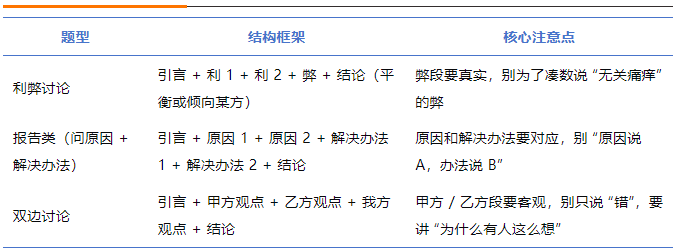
1. 同意与否题型(Do you agree or disagree?):“引言 + 2 个支持段 + 反驳段 + 结论”
适用题目:
明确问 “你是否同意某观点”,比如 “Some people think that schools should teach children how to manage money. Do you agree or disagree?”
框架拆解:
引言段(3 句话):改写题目(换词 / 换句式)→ 亮明观点(“I completely agree”/“I disagree to a large extent”)→ 预告论点(“This is because financial literacy helps children avoid waste and prepares them for adult life”);
支持段 1:主题句(“Firstly, teaching money management helps children develop a sense of frugality”)→ 展开(解释 + 举例);
支持段 2:主题句(“Secondly, this skill is essential for their future lives as adults”)→ 展开(解释 + 逻辑推理);
反驳段(关键!6.5 到 7.5 的加分项):先承认反方合理之处(“Admittedly, some may argue that children are too young to understand complex financial concepts”)→ 再反驳(“However, schools can teach basic skills like budgeting pocket money, which is simple and practical”);
结论段:重申观点(换说法)→ 总结论点(“In conclusion, teaching money management in schools is necessary, as it fosters frugality and equips children for future life”)。
真题例子(剑 18 Test 1 Task 2):
“Some people believe that the best way to reduce crime is to give longer prison sentences. Others think there are better alternative ways to reduce crime. Discuss both views and give your own opinion.”
(双边讨论题型,结构微调为 “引言 + 反方观点段 + 我方观点段 + 结论”):
引言:改写题目(“Opinions differ on whether longer prison terms are the most effective method to cut crime, or if other approaches are better”)→ 亮观点(“While longer sentences have some effect, I believe alternative measures are more impactful”);
反方段:“Those who support longer prison sentences argue that they act as a deterrent”→ 展开(“If people know they will spend many years in prison for a crime, they are less likely to commit it. For example, in some countries with strict sentencing for theft, the theft rate is lower than in places with shorter terms”);
我方段:“However, better alternatives include improving education and providing job training for ex-offenders”→ 展开(“Poor education often leads to high unemployment, which pushes people to crime. By teaching practical skills like carpentry or coding, schools can help young people find jobs. Additionally, ex-offenders with job training are less likely to reoffend, as they can support themselves legally”);
结论:“In summary, though longer prison sentences deter some crimes, improving education and supporting ex-offenders are more effective ways to reduce crime in the long run”。
2. 其他题型结构速查:
练 “论点展开”:
从 “一句话论点” 到 “有说服力的段落”
很多 6.5 分考生的痛点是 “论点有了,但写不出内容”—— 比如论点是 “科技让工作效率提高”,只写 “Technology improves work efficiency. People can finish work faster.”,没有细节支撑,考官会觉得 “论点单薄,缺乏深度”。7.5 分的论点展开需要 “主题句 + 解释 + 论据 + 总结”,让每个论点都像 “有骨架有血肉” 的完整段落。
1. 论点展开黄金公式:主题句(1 句)+ 解释(1-2 句)+ 论据(1-2 句)+ 小结(1 句)
主题句:明确本段核心观点(别绕弯,比如 “Online learning offers flexibility for students”);
解释:回答 “为什么”(“This means students do not have to attend classes at fixed times or locations. They can study at home, on weekends, or even while traveling”);
论据:用 “例子、数据、逻辑推理” 支撑(例子:“For instance, a student in a small town can take a course from a top university in another country via online platforms like Coursera, without moving to the city. 数据:“A survey by UNESCO found that 60% of online learners said flexibility was the main reason they chose this mode of study”);
小结:回扣论点(“This flexibility makes online learning accessible to more people, especially those with busy schedules or limited mobility”)。
2. 避坑:6.5 分 vs7.5 分论点展开对比
真题题目(剑 17 Test 3 Task 2):
“Some people think that governments should spend more money on public services rather than wasting money on arts (such as music and painting). To what extent do you agree or disagree?”
· 6.5 分论点展开(单薄,无细节):
“Public services are important. Governments need to spend money on hospitals and schools. If people are healthy and educated, the country will develop.”
***只有论点,没解释 “为什么重要”,没例子,逻辑断层;
· 7.5 分论点展开(完整,有深度):
“Firstly, public services like healthcare and education are the foundation of a stable society. Without adequate funding for hospitals, many people—especially those from low-income families—may not access quality medical care, leading to higher mortality rates and reduced workforce productivity. For example, in countries where the government cuts healthcare budgets, the number of people waiting for surgery increases by up to 30%, according to a 2023 WHO report. Similarly, underfunded schools lack qualified teachers and teaching resources, which limits students’ ability to gain essential skills. This not only harms individuals’ future prospects but also slows down the country’s economic growth, as the workforce becomes less skilled. Thus, investing in public services directly benefits both citizens and the nation’s development.”
***有解释、有数据例子、有逻辑推理,论点站得住脚。
3. 论据来源:不用 “编造假数据”,3 种安全又好用的论据
常识性例子:“比如”“例如”(用身边常见场景,比如 “学生用在线工具协作完成小组作业”“上班族用视频会议节省通勤时间”);
权威机构 / 趋势:“根据 XX 报告”“研究显示”(不用具体数据,比如 “根据世界卫生组织的研究”“一项针对职场人士的调查发现”);
逻辑推理:“如果…… 就会……”“这会导致……”(比如 “如果政府不投资公共交通,私家车会增多,进而导致交通拥堵和空气污染”)。
真题实操:
从 6.5 到 7.5 的 3 步写作流程
第一步:
10 分钟列提纲(定结构 + 找论点 + 想论据)
拿到题目先别写,花 10 分钟列提纲,避免 “写一半改结构”:
1. 确定题型(比如 “同意与否”)→ 选结构(引言 + 2 支持 + 反驳 + 结论);
2. 找 2-3 个论点(比如 “同意‘政府该投资公共服务’,论点 1:健康是生产力基础;论点 2:教育提升国民素质”);
3. 为每个论点想论据(论点 1:例子 “贫困国家医疗差→劳动力少”;论点 2:逻辑 “教育好→技能强→收入高→消费增长”);
示例提纲(剑 17 Test 3 题目-见上文):
引言:同意 “优先公共服务”,但不认为艺术是 “浪费钱”;
支持 1:公共服务(医疗)→ 健康→ 生产力→ 例子 “WHO 报告”;
支持 2:公共服务(教育)→ 技能→ 经济→ 逻辑 “教育好→收入高”;
反驳:艺术不是浪费→ 艺术提升幸福感、促进文化传承→ 例子 “博物馆、音乐会”;
结论:平衡投资,公共服务是基础,艺术也有价值。
第二步:
30 分钟写正文(按框架填内容,重点练 “论点展开”)
引言:改写题目(用同义词替换,比如 “spend more money on”→“allocate more funds to”,“wasting money”→“squandering resources”)+ 亮观点;
论点段:严格按 “主题句 + 解释 + 论据 + 小结” 写,每段控制在 5-7 句,别太长;
反驳段:先承认反方(“有人认为艺术不重要,因为不能解决温饱”)→ 再反驳(“但艺术能丰富精神生活,比如压力大时听音乐能放松,进而提高工作效率”);
结论:别出新观点,用不同的话重申 “公共服务和艺术都需要投资,前者是基础,后者是精神需求”。
第三步:
5 分钟检查(抓 “结构衔接” 和 “论点逻辑”)
写完别着急交,重点检查 2 点:
结构衔接:段落之间有没有 “衔接词”(比如 “Firstly/Secondly/However/In conclusion”),句子之间有没有 “逻辑词”(比如 “because/thus/for example”);
论点逻辑:每个论点段是不是 “围绕主题句”,有没有 “跑题”(比如论点是 “医疗重要”,别写着写着变成 “教育重要”);
6.5 分常见错误:衔接词少(全用 “Then/And”)、论点跑题;7.5 分:衔接自然、论点紧扣主题。
最后想说:
雅思大作文从 6.5 到 7.5,不是 “背更多高级词”,而是 “把结构理清楚,把论点说透彻”。6.5 分的作文像 “杂乱的货架”,东西都有但找不到;7.5 分的作文像 “规整的超市”,分类清晰、一目了然。
今天就拿剑 17 或剑 18 的大作文真题,用 “列提纲→写正文→检查” 的流程练一篇,重点关注 “论点展开”—— 别再写 “一句话论点”,试着加 “解释 + 例子”,你会发现文章的说服力立刻不一样。
免费留学评估