你有没有因为某个名人一句话,就毫不犹豫地点了下单键?
这种“名人安利,我全都要”的模式,我们早就习以为常。很多时候,听谁的,比听什么更重要。
但你是否意识到,这个看似省心的习惯,其实正好踩中了一个非常隐蔽的逻辑陷阱。

In 2016, Elon Musk confidently stated:
2016年,埃隆·马斯克自信满满地宣称:
“I think we have a decent shot of sending people to Mars in about 10 years.”
“我认为我们很有希望在约十年内将人类送上火星。”
At first glance, this feels credible for majority of people. Musk runs SpaceX, one of the most advanced private space companies, “he” builds rockets, which sometimes manage to take off, if anyone would know, it would be him.
乍看之下,对多数人而言,这话显得颇为可信。马斯克掌管着最先进的私营航天公司之一SpaceX,“他”制造火箭,这些火箭偶尔也确实能飞起来,若说有谁该知道,那必定是他。
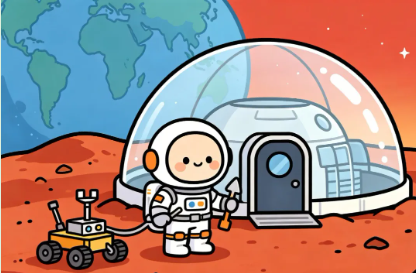
But something is wrong with this line of reasoning. Let's take a closer look
但这种推理方式有问题,我们来仔细看看。
First, there is no empirical proof that sustained human life on Mars is currently viable. The claim rests not on anything actually done, but on projection. It substitutes authority for evidence.
首先,目前并无任何实证能证明人类在火星上长期生存是可行的。这一主张依据的不是已完成的事实,而是预测。它用权威取代了证据。
Second, Musk has a direct financial stake in making such claims sound plausible. Optimism about Mars colonization is not just visionary it attracts huge investments, brings talent, and public attention. There is a huge conflict of interest and it's measured in billions.
其次,马斯克让这些说法听起来言之有理,背后有着直接的经济利益。对火星殖民的乐观态度不仅仅是远见卓识——它还能吸引巨额投资、招揽顶尖人才、赢得公众关注。这其中存在着巨大的利益冲突,其规模高达数十亿美元。
Third, and most importantly, Musk is not a planetary scientist, a medical expert in long-term extraterrestrial habitation, nor a specialist in closed-loop ecological systems. His expertise is not comprehensive enough to justify certainty on the outcome.
第三,也是最重要的一点,马斯克并非行星科学家,不是长期地外居住领域的医学专家,也不是闭环生态系统专家。他的专业知识远不足以让他在这一结果上给出定论。
And yet, millions accept the claim at face value without ever seriously tackling those “details”. Why?
然而,千千万万人对这说法照单全收,却从不认真对待那些“细节”。为什么?
Because he's an “expert” and he should know more than we do.
因为他是“专家”,他理应比我们知道得多。
Welcome to another entry in Leo's Logical Fallacies.
欢迎阅读Coach Leo逻辑谬误系列最新一篇。
This time, we examine one of the most persuasive shortcuts in human reasoning: the Appeal to Authority.
这一次,我们探讨人类推理中最具说服力的捷径之一:诉诸权威。
This logical fallacy is extremely powerful for a simple reason: it rarely sounds irrational. In fact, it often sounds like the opposite: informed, credible, even sophisticated. That is precisely what makes it so effective.
这一逻辑谬误效力极强,原因很简单:它极少显得不理性。事实上,它往往听起来恰恰相反:显得有见识、可信,甚至颇为精妙。正因如此,它才如此奏效。
The Structure结构
At its core, the Appeal to Authority follows a simple structure:
诉诸权威的核心遵循一种简单的结构:
A (Authority) is an expert or respected figure.
A(权威)是专家或受人尊敬的人物。
A claims that B is true.
A 声称 B 为真。
Therefore, B must be true.
因此,B 必定为真。
The flaw lies in the leap from credibility to certainty. Authorities can inform probability. They cannot replace proof.
其缺陷在于从可信到确凿的跳跃。权威可以提示可能性,却无法取代证明。
This becomes a fallacy when:
在以下情况下,它就成了一种谬误:
• The authority's expertise is irrelevant or overstated.该权威的专业知识与议题无关,或被夸大
• The authority has a conflict of interest.该权威存在利益冲突
• The claim lacks independent supporting evidence.该主张缺乏独立的支持性证据
Our susceptibility to authority is not accidental. It is deeply embedded in human psychology.
我们对权威有天然的好感,是深植于人类心理之中的本能。
In the 1960s, Stanley Milgram conducted his now-famous obedience experiments. Participants were instructed by an authority figure to administer what they believed were painful electric shocks to another person. A majority complied despite clear moral discomfort – just because the experts told them too.
20 世纪 60 年代,斯坦利·米尔格拉姆进行了如今闻名于世的服从实验。参与者被一位权威人物指示,向另一个人施加他们自认为是痛苦的电击。尽管明显感到道德不安,大多数受试者依然照做了——只因专家让他们这么干。

The lesson was unsettling: people defer to authority even when it contradicts their own judgment.
这其中的教训令人不安:即便与自己的判断相悖,人们仍会屈从于权威。
Decades later, Robert Cialdini formalized this tendency in his principle of Authority. We are wired to trust experts because, in many cases, it is efficient. Expertise often correlates with accuracy.
几十年后,罗伯特·西奥迪尼在其提出的权威原理中将这一倾向正式化。我们天生倾向于信任专家,因为在许多情况下,这样做效率很高。专业往往与准确性相关。
But efficiency comes at a cost. When we stop questioning authority, we stop thinking critically.
但效率是有代价的。一旦我们停止质疑权威,也就停止了批判性思考。
In Public Forum debate, this fallacy appears constantly often dressed as strong evidence.
在公共论坛辩论中,这一谬误屡见不鲜,且常披着有力证据的外衣。
I. Authority ≠ Evidence 权威≠证据
Resolution: Renewable energy sources can fully replace fossil fuels in the next 20 years
辩题:可再生能源在未来 20 年内能完全取代化石燃料
A debater claims:
一位辩手声称:
“A leading CEO in the energy sector says full transition is achievable, so it must be realistic.”
“一位能源行业的领军 CEO 说全面转型可以实现,所以这必定是现实的。”
The problem: a CEO's opinion is not data. Without modeling, infrastructure analysis, and timelines, the argument rests entirely on status, not substance.
问题在于:CEO 的观点不是数据。没有模型、基础设施分析和时间表,该论证完全依赖身份地位,而非实质内容。
II. Conflict of Interest 利益冲突
Resolution: AI-generated entertainment has a negative impact on young viewers
辩题:人工智能生成的娱乐内容对年轻观众有负面影响
A debater argues:
一位辩手主张:
“A major film executive claims AI content is harmful to children.”
“一位大型电影公司高管称,AI 内容对儿童有害。”
But that executive's industry is directly threatened by AI. There's a conflict of interest. Their claim may be valid but it is also strategically convenient. Without independent studies, the argument is compromised.
然而,那位高管的行业正直接受到 AI 的威胁。存在利益冲突。其主张或许有理,但在战略上也正中下怀。缺少独立研究,该论证便打了折扣。
III. Irrelevant Credentials 无关的资历
Resolution: The worldwide dominance of English is more beneficial than harmful
辩题:英语在全球的主导地位利大于弊
A debater says:
一位辩手说道:
“A famous tech entrepreneur argues that English unifies global communication.”
“一位著名科技企业家认为,英语统一了全球沟通。”
But linguistic and cultural impact is not a tech question it belongs to sociolinguistics, anthropology, and cultural studies. The authority cited is simply not qualified in the relevant domain.
但语言与文化影响并非科技问题,它属于社会语言学、人类学和文化研究领域。所引用的权威在相关领域根本不具备资格。
BONUS: The Einstein Problem 爱因斯坦问题
Even the greatest minds are not immune to misuse. Albert Einstein once remarked:
即便是最伟大的头脑也难逃被误用的命运。阿尔伯特·爱因斯坦曾言:

“Nothing will benefit human health and increase chances for survival of life on Earth as much as the evolution to a vegetarian diet.”
“没有什么比转向素食更能增进人类健康、提高地球生命存续机会的了。”
It sounds profound and perhaps it is, we just might be better suited to be vegetarians. But Einstein was a physicist, not a nutritionist. His authority in relativity does not transfer to dietary science.
这听起来很深刻,也许确实如此,我们或许真更适合做素食者。但爱因斯坦是物理学家,而非营养学家。他在相对论领域的权威无法迁移到饮食科学上来。
Expertise in one field does not transfer to another.
一个领域的专业能力不能迁移到另一个领域。

Recognizing the fallacy is only half the battle. Effective debaters must also expose it strategically.
识别出谬误只是成功的一半。有效的辩手还必须策略性地揭露它。
Demand Evidence Beyond the Authority
要求权威之外的证据
“Even if that expert believes it, what data supports the claim?”
“即使那位专家这么认为,有什么数据能支持该主张?”
Example: On renewable energy, shift the debate toward studies, projections, and infrastructure constraints, not opinions.
示例:在可再生能源议题上,将辩论引向研究、预测和基础设施限制,而非观点。
Expose Conflicts of Interest
揭露利益冲突
“Is this authority neutral, or do they benefit from this claim being true?”
“这位权威是否中立,还是他们会因该主张成立而获益?”
Example: In AI debates, highlight industry incentives and ask for independent academic research instead.
示例:在有关人工智能的辩论中,强调行业动机,并要求提供独立的学术研究。
Challenge Relevance of Expertise
质疑专业知识的关联性
“Is this person actually qualified in this specific field?”
“这个人确实在这个特定领域具备资格吗?”
Example: On language dominance, redirect toward linguists and cultural researchers, not unrelated public figures.
示例:在语言主导地位问题上,转向语言学家和文化研究者,而非不相关的公众人物。

The Appeal to Authority persists because it works. It simplifies complexity. It allows us to outsource judgment in a world overloaded with information. And importantly, it is not always wrong.
诉诸权威之所以长盛不衰,是因为它确实管用。它化繁为简,让我们在信息过载的世界里得以将判断外包。而且重要的是,它也并非总是错误。
Experts and credentials matter. In many cases, they are the best guides we have. But they are not infallible.
专家与资历的确重要。在许多情况下,它们是我们拥有的最佳向导。但它们并非万无一失。
The critical distinction is this:
关键区别在于:
Authority should start an argument, but it is not enough to end it.
权威应当开启一个论证,但不足以就此终结它。
Because the moment we stop asking why,
因为,一旦我们停止追问“为什么”,
we stop thinking altogether.
我们便完全停止了思考。
The topic 辩题:
“AI-generated entertainment has a negative impact on young viewers.”
“AI 生成的娱乐内容对年轻观众存在负面影响。”

A speaker responds:
一位发言者回应道:
“AI-generated entertainment isn't really harmful. In fact, for media-savvy audiences, it encourages critical thinking and deeper engagement with content. Studies even show that these users analyze media more thoughtfully than ever.”
“AI 生成的娱乐内容其实并无真正危害。事实上,对深谙媒体的受众来说,它反而能鼓励批判性思维,促进对内容的深入参与。研究甚至表明,这些用户对媒体的分析比以往任何时候都要更周到。”
The argument sounds informed and relevant. But is it answering the question?
这番论证听着有见识且切题。可它是否在回应问题本身?
Think carefully.The answer will appear in the next article.
仔细想想,答案将在下篇文章中揭晓。