我们几乎每天都在这样推理:一件事紧随另一件事发生,我们就认定前者是后者的原因。
这种思维方式如此自然,以至于我们很少停下来问一句:真的吗?
今天,Coach Leo要带我们要拆解的正是一个藏在这种日常直觉背后的经典谬误——它看似合理,却常常让我们的论证不堪一击。

In a debate on the motion “The worldwide dominance of English is more beneficial than harmful to global cultural development,” a speaker offers what sounds like a decisive observation: “Since English became the dominant global language, smaller languages have steadily declined. This clearly shows that the spread of English is destroying cultural diversity.”
在一场关于“英语的全球主导地位对全球文化发展利大于弊”的辩论中,一位发言者提出了一个听起来颇具说服力的观察:“自从英语成为全球主导语言以来,小语种一直在稳步衰落。这清楚地表明,英语的传播正在破坏文化多样性。”
At first glance, the reasoning feels complete. The timeline aligns. One phenomenon rises, another falls, and the mind instinctively draws a line between them. Correlation is established. But that timeline, no matter how intuitive it feels, is not evidence. It is an assumption. Because the fact that one thing follows another does not, on its own, explain why that happens. Or in other words: correlation DOES NOT grant causation.
乍一看,这个推理似乎很完整。时间线吻合。一个现象上升,另一个下降,大脑本能地在两者之间画上连线。相关性就此确立。但那条时间线,无论感觉多么直观,都不是证据,而是一种假设。因为一件事发生在另一件事之后,本身并不能解释为什么会发生。换句话说:相关并不赋予因果。
Welcome back to Leo's Logical Fallacies, where we examine not just what arguments say, but how they quietly persuade us to believe more than they prove! Today’s fallacy is subtle, common, and remarkably persuasive precisely because it mirrors how we naturally think:
欢迎回到 Leo 的逻辑谬误系列——我们不仅审视论点说了什么,更探究它们如何悄然说服我们去相信超出其证明范围的东西!今天的谬误微妙、常见,而且极具说服力,恰恰因为它反映了我们自然的思维习惯:
Post Hoc Ergo Propter Hoc (After this, therefore because of this)
后此谬误(在此之后,因而因此之故)
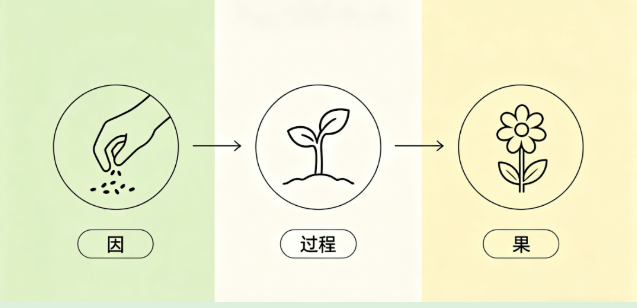
It is the habit of mistaking sequence for causation, of believing that because something came after, it must have been caused by what came before.
这是一种将时间顺序误认为因果关系的习惯——相信因为某事发生在后,就必定由在前之事所导致。

The structure is straightforward: Event A occurs → Event B follows → Therefore, A caused B. However, the problem is not in the timeline. It is in the conclusion drawn from it.
其结构很简单:事件 A 发生 → 事件 B 随后发生 → 因此 A 导致了 B。然而,问题不在于时间顺序本身,而在于从中得出的结论。
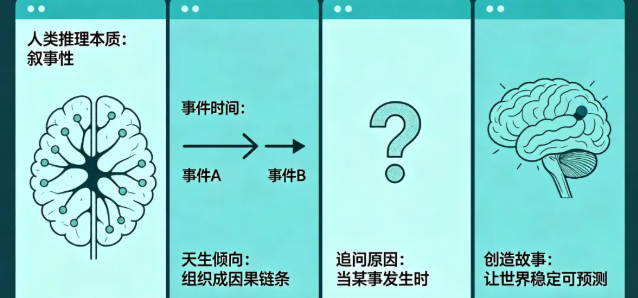
Human reasoning is deeply narrative. We are wired to organize events into cause-and-effect chains. When something happens, we instinctively ask why. And when the answer is not immediately clear, we often create one, because stories make the world feel stable, predictable, and understandable.
人类推理本质上是叙事性的。我们天生倾向于将事件组织成因果链条。当某事发生时,我们本能地追问原因。当答案不明确时,我们常常自己创造一个——因为故事让世界显得稳定、可预测、可理解。
In fact, this tendency has been studied for decades. In the 1940s, B. F. Skinner conducted a now-famous experiment with pigeons. Food was delivered to them at random intervals, completely unrelated to their behavior. But the pigeons didn’t know that. They began to associate whatever they had been doing at the moment food appeared with the reward itself. One bird started turning in circles. Another bobbed its head. Another flapped its wings in a particular pattern. And they kept repeating those actions, convinced that these movements were causing the food to appear. Nothing they were doing had any effect, but the pattern felt real.
事实上,这种倾向已被研究数十年。1940年代,B. F. 斯金纳进行了一项著名的鸽子实验。食物以随机间隔投放,与鸽子的行为完全无关。但鸽子并不知情。它们开始将自己正在做的动作与食物出现联系起来。一只鸽子开始转圈,另一只点头,还有一只以特定方式扇动翅膀。它们不断重复这些动作,坚信是这些行为带来了食物。它们所做的一切毫无效果,但那个模式感觉如此真实。
Humans are not different. Studies by researchers such as Helena Matute have shown that people are especially likely to perceive causation when two events occur frequently together. The more often action and outcome appear side by side, the stronger the illusion becomes.
人类并无不同。Helena Matute 等学者的研究表明,当两个事件频繁同时出现时,人们尤其容易感知到因果关系。行动与结果并肩出现的频率越高,这种错觉就越强烈。
This tendency has been studied extensively in psychology. In classic research on the illusion of causation, participants were asked to determine whether a particular action influenced an outcome. In reality, the outcome occurred randomly and was not affected by their behavior at all. Yet participants consistently reported that their actions had an effect. They began to believe that certain patterns, sequences, or decisions were producing results, even when no real connection existed.
这种倾向在心理学中得到了广泛研究。在关于因果错觉的经典实验中,参与者被要求判断某一特定行为是否影响了结果。而事实上,结果是随机出现的,完全不受他们行为的影响。然而参与者始终报告说自己的行为产生了效果。他们开始相信某些模式、顺序或决定正在带来结果——即使并不存在任何真实的联系。
In other words, repetition creates conviction. People repeat the same steps, adjust small details, and search for the “right” combination, as if the outcome could be unlocked through effort. But in many cases, nothing they are doing actually matters. What they experience is not control, but an illusion of causation. It is the powerful feeling that one thing must be causing another, simply because they appear together, and once that belief takes hold, it becomes remarkably difficult to question.
换句话说,重复产生信念。人们重复相同的步骤,调整细微之处,寻找“正确”的组合,仿佛结果可以通过努力来解锁。但在许多情况下,他们的所作所为其实毫无影响。他们所体验到的不是控制,而是因果错觉——一种强烈的感觉,认为一件事必然导致另一件事,仅仅因为它们一起出现。一旦这种信念扎根,就极难被质疑。
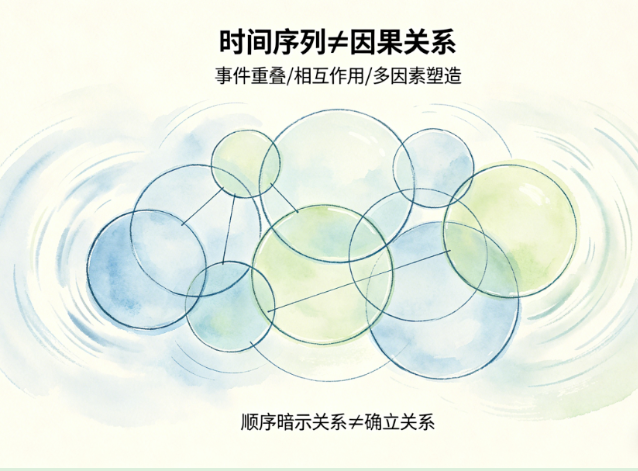
However, reducing the sequence to causation is rarely the right answer. Events overlap, interact, and unfold at the same time, often shaped by multiple forces that are not immediately visible. A sequence CAN suggest a relationship, but it cannot, on its own, establish one, no matter how convincing the story may feel.
然而,将时间序列简化为因果关系很少是正确的答案。事件相互重叠、相互作用、同时展开,常常受到多种不易察觉的力量塑造。一个顺序确实可以暗示某种关系,但它本身无法确立这种关系——无论那个故事感觉多么令人信服。

1. Warrant 论证依据
Consider a debate on public infrastructure: PRO argues “Cities that invested heavily in public transportation have seen reduced traffic congestion over time. This proves that public transport investment directly solves traffic problems.” It sounds like a well-supported claim. The sequence is clear: investment first, improvement later. But what sits between those two points?
• urban planning changes
• population density shifts
• fuel price fluctuations
• remote work trends
• policy incentives or restrictions on car use
The logic of this warrant assumes one sole factor to be responsible for the outcome, but there were many other factors could have played a role. PRO does not demonstrate that public transport caused the reduction; it simply notes that the two occurred in succession.
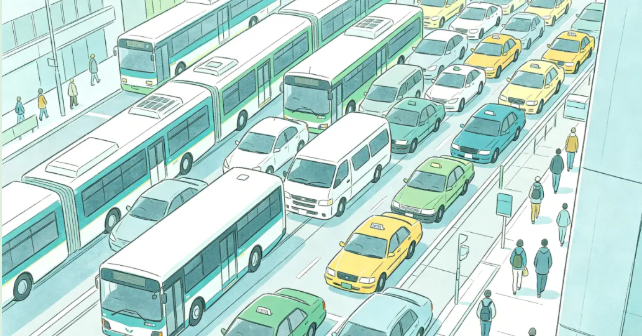
考虑一场关于公共基础设施的辩论:正方主张“大力投资公共交通的城市,随着时间的推移交通拥堵得到了缓解。这证明公共交通投资直接解决了交通问题。”这听起来像一个证据充分的论点。顺序很清楚:投资在前,改善在后。但这两点之间存在着什么?
• 城市规划变化
• 人口密度变化
• 燃油价格波动
• 远程办公趋势
• 对汽车使用的政策激励或限制。
这一论证的逻辑假定单一因素是结果的原因,但许多其他因素都可能发挥了作用。正方并没有证明公共交通导致了拥堵缓解——他只是指出两者先后发生。
2. Impact 影响层面
In the same debate PRO builds their case and reaches the impact: “In countries that have restricted animal testing, we’ve seen a decline in animal suffering alongside continued progress in medical research. This shows that banning animal testing leads to both ethical and scientific advancement.” Sounds good: Less animal suffering; Continued scientific innovation. But look carefully at what’s happening. The argument moves from: “These things happened in the sequence…” to: “One caused the other.” The timeline becomes the proof. But is that enough? Scientific progress may have continued despite the restrictions, not because of them. Or it may have been driven by entirely different forces:
✓ New technologies
✓ Increased funding
✓ Global collaboration
✓ Private sector investment.
The impact assumes a clean cause-and-effect relationship. But what we actually have… is overlap.
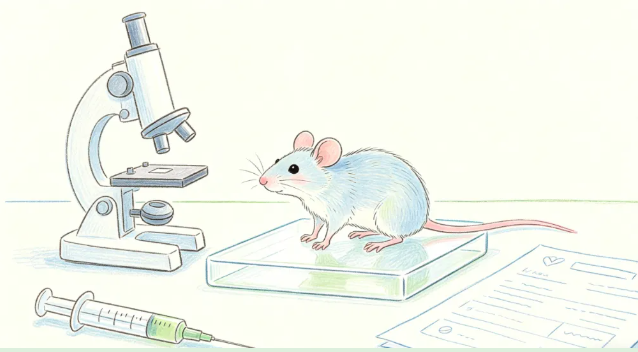
在同一场辩论中,正方构建论点并得出影响层面:“在限制动物实验的国家,我们看到动物痛苦减少,同时医学研究持续进步。这表明禁止动物实验既带来了伦理进步,也带来了科学进步。”听起来不错:动物痛苦减少,科学创新持续。但仔细看看发生了什么。论证从“这些事情按顺序发生……”跳到了“一件事导致了另一件事”。时间线成了证据。但这足够吗?科学进步可能是在限制措施存在的情况下仍然持续,而不是因为限制措施而持续;也可能由完全不同的力量驱动:
✓ 新技术
✓ 增加的资金
✓ 全球合作
✓ 私营部门投资
这个影响层面假设了一个干净的因果关系。但我们实际拥有的……是重叠。

This fallacy is not confined to formal debate. It shapes everyday thinking in ways that often go unnoticed. A company introduces a new workplace policy. A few months later, employee satisfaction drops. The immediate conclusion: “This policy caused the decline.” Perhaps it did. But perhaps, at the same time:
• management changed
• workloads increased
• economic uncertainty affected morale
• external stressors influenced employees
The policy came first. The dissatisfaction came later. But the connection between the two remains unproven. What we are witnessing is not careful reasoning, it is the mind’s preference for tidy explanations.
这种谬误不仅限于正式辩论。它常常以不易察觉的方式塑造着日常思维。一家公司推出了新的工作场所政策。几个月后,员工满意度下降。立即得出的结论是:“这项政策导致了下降。”也许确实如此。但也许在同一时期:
• 管理层变动
• 工作量增加
• 经济不确定性影响了士气
• 外部压力影响了员工
政策在先,不满在后。但两者之间的联系仍未得到证实。我们看到的不是严谨的推理,而是大脑对简洁解释的偏好。

When an opponent relies on sequence as proof, your task is to reopen the space between events to show that the story is incomplete.
当对手以时间顺序作为证据时,你的任务是在事件之间重新打开空间,证明那个故事是不完整的。
1.Distinguish Timing from Causation – Begin by calmly separating what is observed from what is claimed. “Yes, these events occurred in that order. But order alone does not establish causation.” This move is powerful because it does not deny facts; it reframes their meaning.
1. 区分时间顺序与因果关系 – 冷静地将观察到的事实与被声称的结论分开。“是的,这些事件按此顺序发生。但仅凭顺序并不能确立因果关系。”这一策略之所以有力,是因为它不否认事实,而是重新框定其意义。
2.Reintroduce Complexity – Next, widen the lens. “Traffic patterns are influenced by multiple factors, including urban design, population density, and economic trends. It is overly simplistic to attribute the change to a single variable.” By introducing alternative explanations, you weaken the certainty of the original claim. You do not need to prove a different cause. You only need to show that there are many possible causes.
2. 重新引入复杂性 – 然后,拓宽视野。“交通模式受到多种因素影响,包括城市设计、人口密度和经济趋势。将变化归因于单一变量过于简单化。”通过引入替代解释,你削弱了原主张的确定性。你不需要证明另一个原因,只需要证明存在许多可能的原因。
3.Ask for the Mechanism – Finally, press for depth. “How exactly does A lead to B? What is the mechanism that explains this relationship?” Causal claims require more than sequence; they require explanation. Without a clear mechanism, the argument rests on assumption rather than analysis.
3. 追问作用机制 – 最后,追问深度。“A 究竟如何导致 B?解释这种关系的机制是什么?”因果主张需要的不仅仅是顺序,还需要解释。没有清晰的机制,论证就建立在假设而非分析之上。
Because it feels like common sense. We experience the world as a sequence of events, and it is natural to interpret those events as connected. The human brain prefers coherence over uncertainty, and a clear cause provides a sense of control. But clarity can be misleading. In complex systems—whether social, economic, or cultural—outcomes rarely have a single cause. They emerge from interactions, overlaps, and gradual shifts that resist simple explanation. The fallacy works because it offers something we want: a clean answer to a complicated question.
因为它感觉像是常识。
我们以事件序列的方式体验世界,将那些事件解释为相互关联是再自然不过的事。
人脑偏爱连贯性而非不确定性,一个清晰的原因能提供一种掌控感。
但清晰可能具有误导性。
在复杂系统中——无论是社会的、经济的还是文化的——结果很少只有一个原因。它们产生于相互作用、重叠和渐进的变迁,难以用简单的解释来概括。
这个谬误之所以有效,是因为它提供了我们想要的东西:对一个复杂问题的干净答案。

A speaker argues: “A Nobel Prize winning scientist has stated that video games are harmful to cognitive development. Given their expertise, this proves that video games negatively impact young minds.”
一位发言者辩称:“一位诺贝尔奖得主科学家曾表示,电子游戏对认知发展有害。鉴于其专业背景,这证明电子游戏对年轻人的心智有负面影响。”

Who's the scientist, what's his expertise, what logical fallacy might be hiding here?
这位科学家是谁?他的专业领域是什么?这里可能隐藏着什么逻辑谬误?
(Hint: The fallacy is not Post Hoc—it's an appeal to authority, specifically one where the authority’s expertise may not be directly relevant to the claim. The riddle invites you to identify the fallacy of arguing from an expert's general prestige rather than from domain-specific evidence.)
(提示:这个谬误不是后此谬误——而是诉诸权威,尤其是一种权威的专业领域可能与所主张的内容不直接相关的谬误。这个谜题邀请你识别出那种以专家的总体声望而非领域内具体证据为论证依据的谬误。)
真正扎实的论证,
不是靠诡辩和逻辑跳跃,
论证讲究穿透事物表层迷雾,直击本质。
这正是英锐学术辩论课程能提供的——
系统学习如何识别谬误,
构建因果链条,
用证据和逻辑支撑你的立场,
而不是被直觉和叙事牵着走。
逻辑不是束缚,
而是赢得信任、清晰表达的最强工具。
欢迎加入我们,
一起成为更清醒、更有力的表达者。
免费留学评估